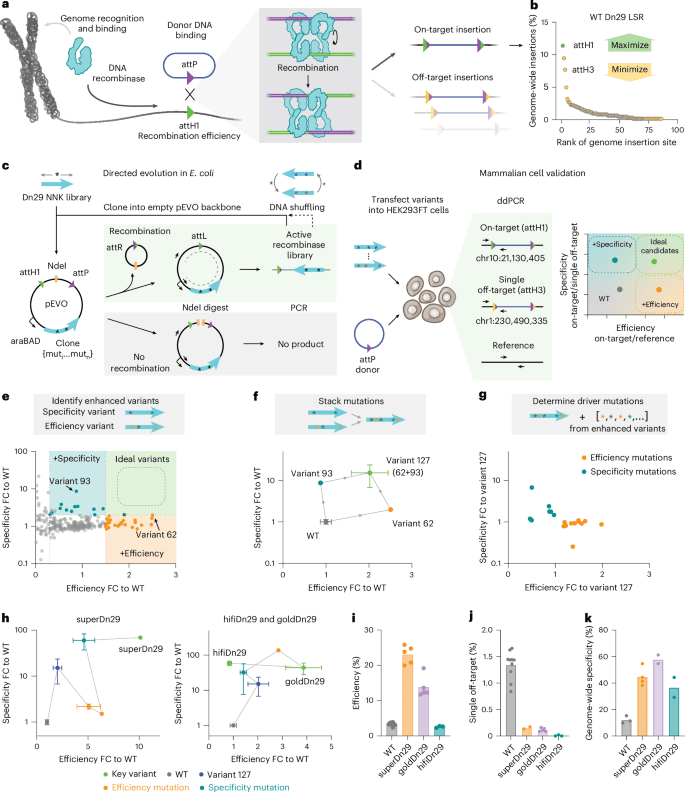
Rapid directed evolution guided by protein language models and epistatic interactions
Tran VQ, Nemeth M, Bartie LJ, Chandrasekaran SS, Fanton A, Moon HC, Hie BL, Konermann S, Hsu PD


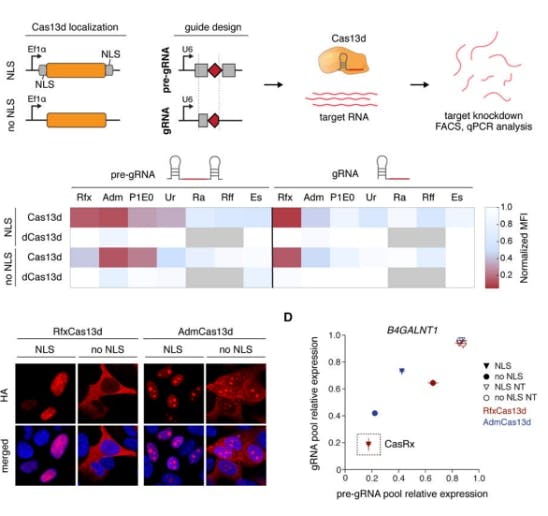
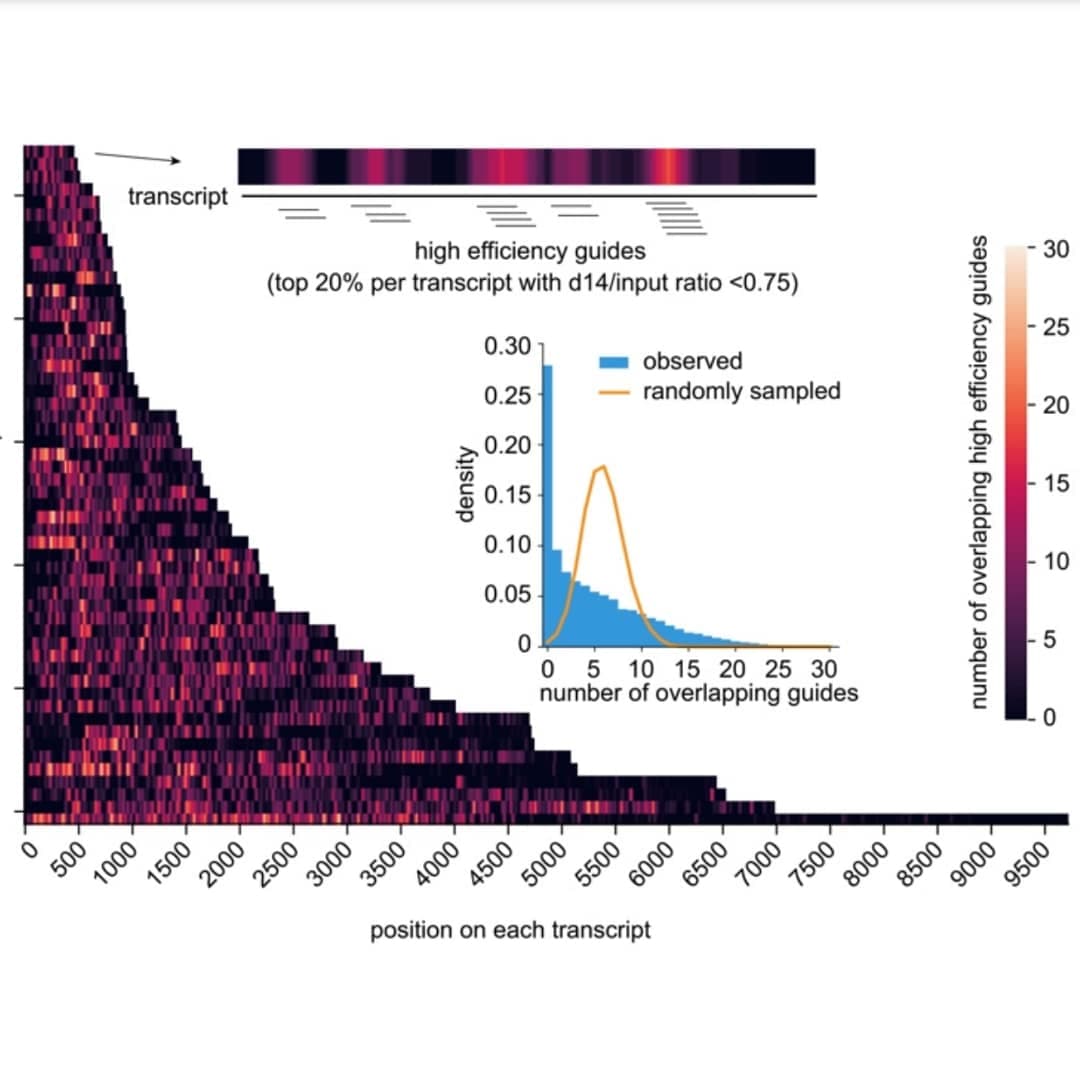
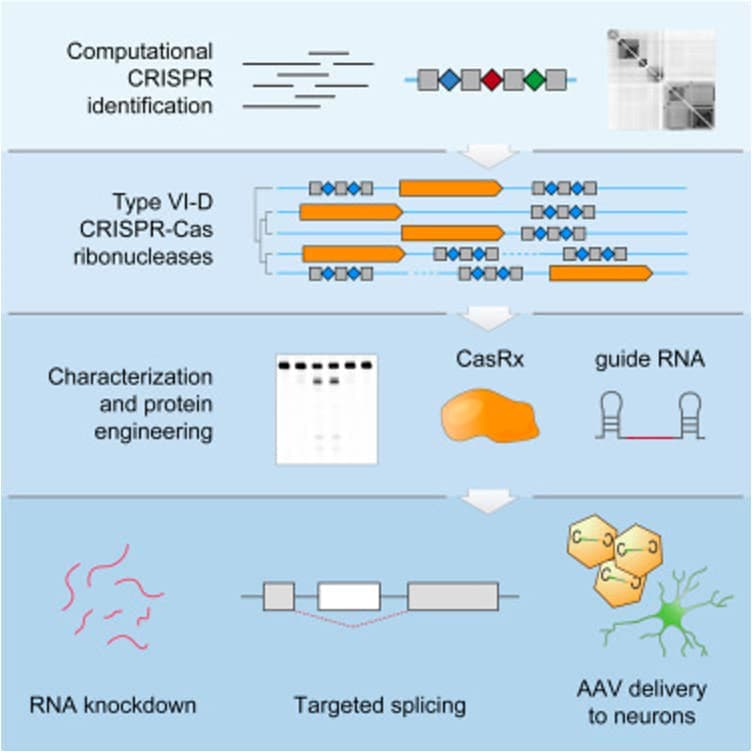
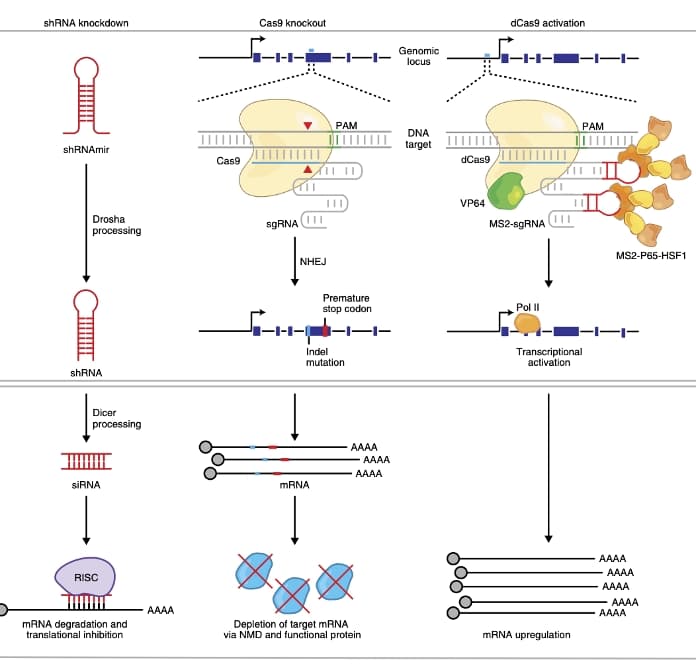
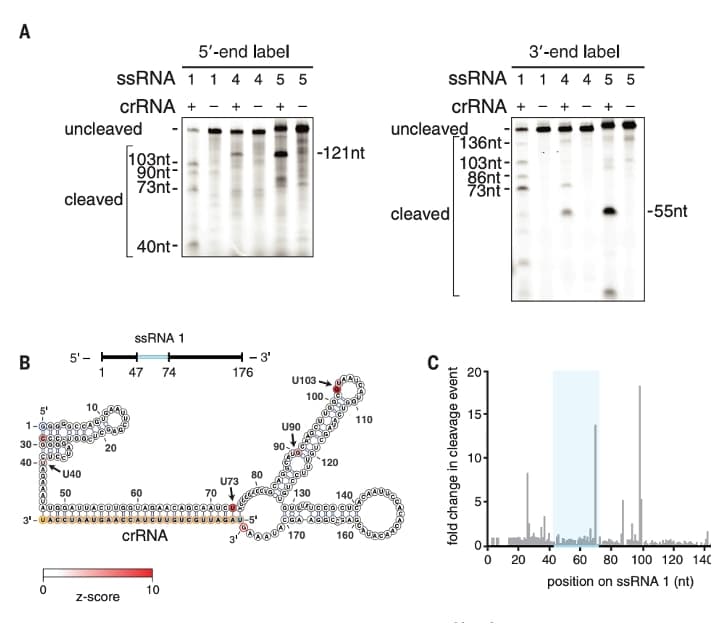
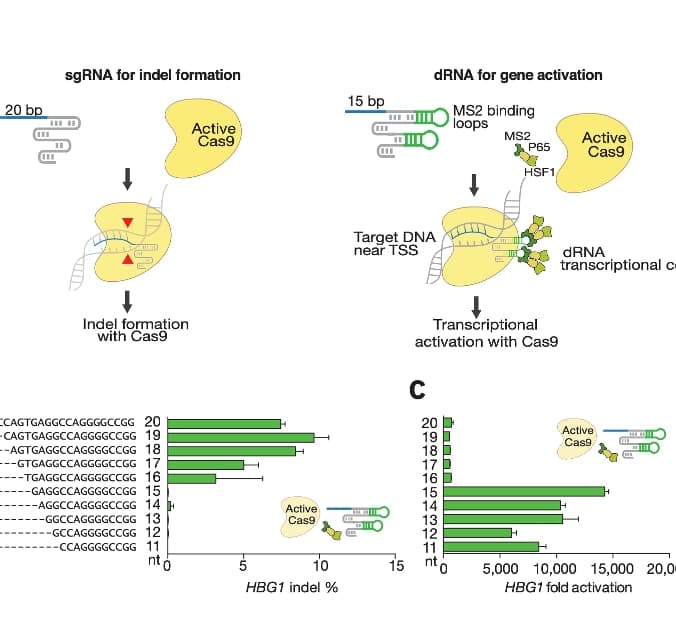
The ability to perturb desired RNA molecules in a cell with high efficiency and specificity is a key technology across biomedical science. Despite rapid progress in effective technologies for genome engineering, analogous systems for transcriptome engineering lag behind their DNA counterparts. We recently identified the RNA-targeting type VI-D CRISPR-Cas family (Cas13d), in particular the engineered Cas13d from R. flavefaciens strain XPD3002 (CasRx) (Konermann et al., 2018), which are the smallest and most efficient Cas13 RNA targeting effectors in mammalian and plant cells reported to date. We are working to further characterize and optimize the Cas13d enzymes as RNA-targeting tools (Wei et al., 2022) to advance the investigation of RNA biology and application in RNA therapeutics.

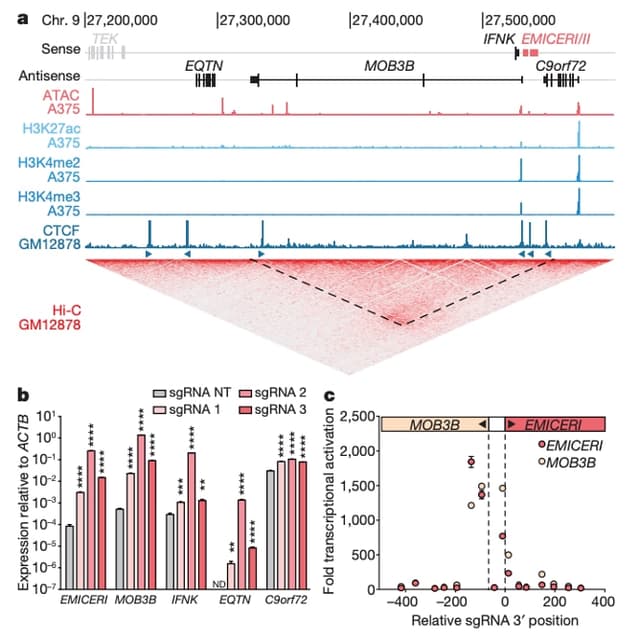
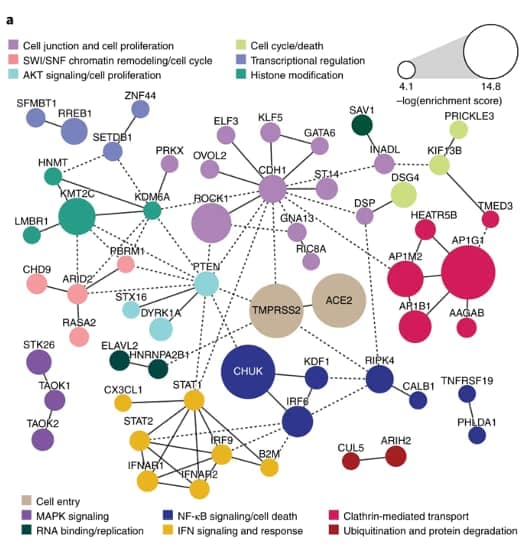
High-throughput CRISPR perturbation screening has emerged as a powerful approach to interrogate gene expression networks (Konermann et al., 2015; Joung et al., 2017; Biering et al., 2022). We are developing and applying methods for CRISPR screening in stem cell-derived models of the human brain to investigate the cellular and molecular pathways driving genetic risk in neurodegenerative disease. Concurrently, we are developing computational methods for analyzing large-scale perturbation datasets towards the goal of elucidating the genetic architecture of complex disease risk.

Tran VQ, Nemeth M, Bartie LJ, Chandrasekaran SS, Fanton A, Moon HC, Hie BL, Konermann S, Hsu PD

Chandrasekaran SS, Tau C, Fu BXH, Nemeth M, Bartie L, Pawluk A, Konermann S, Hsu PD

Fanton A, Bartie LJ, Martins JQ, Tran VQ, Goudy L, Kernick C, Durrant MG, Wei J, Armour-Garb Z, Pawluk A, Konermann S, Marson A, Gilbert LA, Roth TL, Hsu PD

Perry NT, Bartie LJ, Katrekar D, Gonzalez GA, Durrant MG, Pai JJ, Fanton A, Martins JQ, Hiraizumi M, Ricci-Tam C, Nishimasu H, Konermann S, Hsu PD

Roohani YH, Hua TJ, Tung PY, Bounds LR, Yu FB, Dobin A, Teyssier N, Adduri A, Woodrow A, Plosky BS, Mehta R, Hsu B, Sullivan J, Ricci-Tam C, Li N, Kazaks J, Gilbert LA, Konermann S, Hsu PD, Goodarzi H, Burke DP

Matthew G. Durrant*, Nicholas T. Perry*, James J. Pai, Aditya R. Jangid, Januka S. Athukoralage, Masahiro Hiraizumi, John P. McSpedon, April Pawluk, Hiroshi Nishimasu, Silvana Konermann, Patrick D. Hsu

Jingyi Wei, Peter Lotfy, Kian Faizi, Hannah Slabodkin, Emily Kinnaman, Sita Chandrasekaran, Hugo Kitano, Matthew G. Durrant, Connor V. Duffy, Patrick David Hsu, Silvana Konermann

Scott B. Biering, Sylvia A. Sarnik, Eleanor Wang, James R. Zengel, Sarah R. Leist, Alexandra Schäfer, Varun Sathyan, Padraig Hawkins, Kenichi Okuda, Cyrus Tau, Aditya R. Jangid, Connor V. Duffy, Jin Wei, Rodney C. Gilmore, Mia Madel Alfajaro, Madison S. Strine, Xammy Nguyenla, Erik Van Dis, Carmelle Catamura, Livia H. Yamashiro, Julia A. Belk, Adam Begeman, Jessica C. Stark, D. Judy Shon, Douglas M. Fox, Shahrzad Ezzatpour, Emily Huang, Nico Olegario, Arjun Rustagi, Allison S. Volmer, Alessandra Livraghi-Butrico, Eddie Wehri, Richard R. Behringer, Dong-Joo Cheon, Julia Schaletzky, Hector C. Aguilar, Andreas S. Puschnik, Brian Button, Benjamin A. Pinsky, Catherine A. Blish, Ralph S. Baric, Wanda K. O’Neal, Carolyn R. Bertozzi, Craig B. Wilen, Richard C. Boucher, Jan E. Carette, Sarah A. Stanley, Eva Harris, Silvana Konermann, Patrick D. Hsu

Silvana Konermann, Peter Lotfy, Nicholas J Brideau, Jennifer Oki, Maxim N Shokhirev, Patrick D Hsu

Julia Joung, Silvana Konermann, Jonathan S Gootenberg, Omar O Abudayyeh, Randall J Platt, Mark D Brigham, Neville E Sanjana, Feng Zhang

Omar O Abudayyeh, Jonathan S Gootenberg, Silvana Konermann, Julia Joung, Ian M Slaymaker, David BT Cox, Sergey Shmakov, Kira S Makarova, Ekaterina Semenova, Leonid Minakhin, Konstantin Severinov, Aviv Regev, Eric S Lander, Eugene V Koonin, Feng Zhang

James E Dahlman, Omar O Abudayyeh, Julia Joung, Jonathan S Gootenberg, Feng Zhang & Silvana Konermann

Silvana Konermann, Mark D. Brigham, Alexandro E. Trevino, Patrick D. Hsu, Matthias Heidenreich, Le Cong, Randall J. Platt, David A. Scott, George M. Church, Feng Zhang

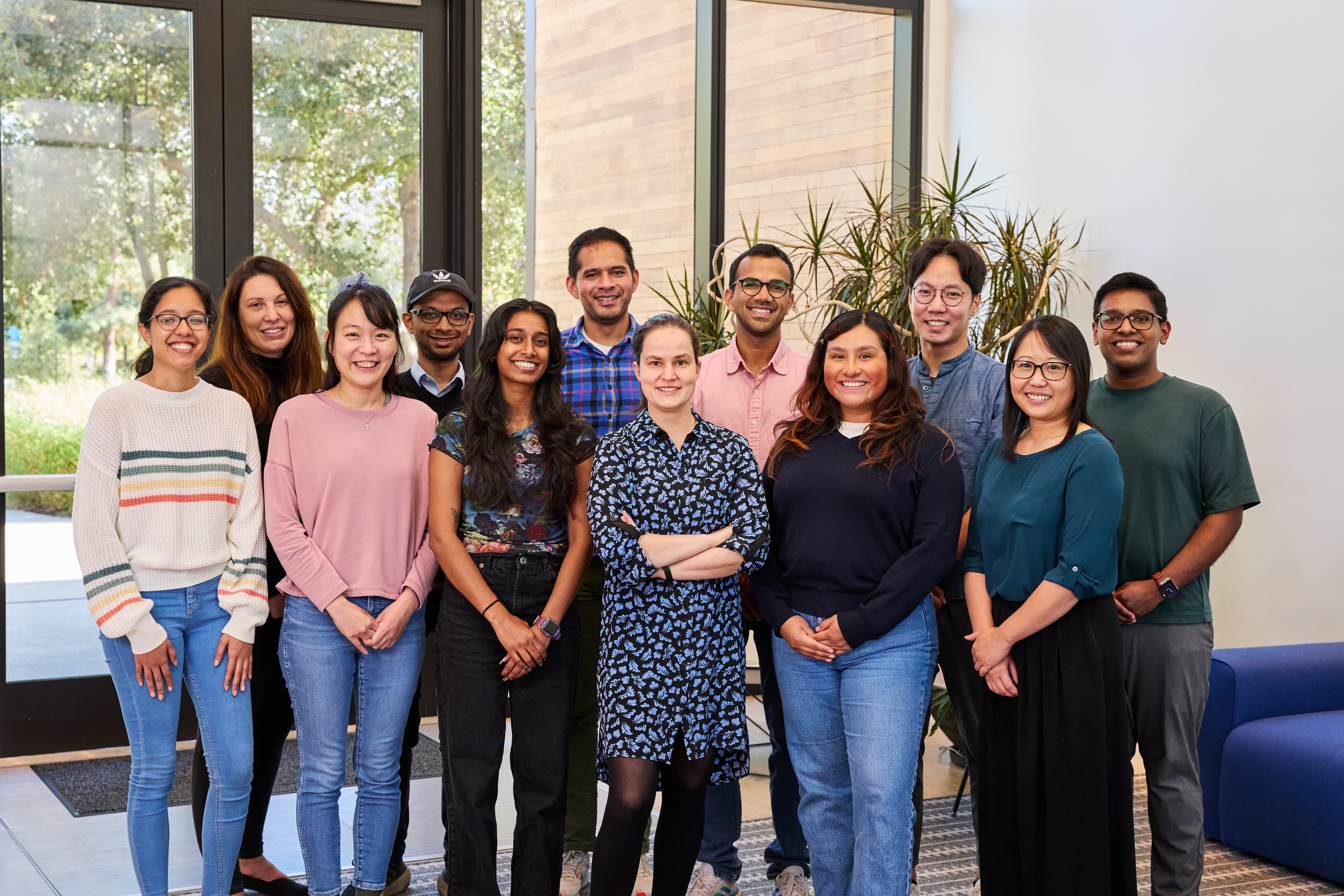
Silvana is an Assistant Professor of Biochemistry at Stanford. Her research laboratory aims to understand the molecular pathways that drive the development of Alzheimer’s disease using next-generation functional genomics, with the long-term goal of developing rationally targeted therapeutics for neurodegenerative disorders. She received her Ph.D. in Neuroscience from MIT. Silvana’s pioneering work on tools to directly perturb the transcriptomic landscape of the cell using CRISPR has been recognized by her faculty appointment as a Chan Zuckerberg Biohub Investigator and Hanna Gray Fellow of the Howard Hughes Medical Institute.

Kiki Chu is the lab manager for the Konermann and Hsu labs at the Arc Institute. She received her PhD from the University of Wisconsin-Madison and completed her postdoctoral training at Massachusetts General Hospital. Before joining the Arc Institute, she was a lab manager at MIT in a neuroelectrophysiology lab, further adding to her diverse research background in the fields of lipid metabolism and cancer biology.

Andreas is an Associate Director of Discovery Biology and Functional Genomics in the Konermann and Hsu labs. He previously led drug development programs for siRNA and antibody therapeutics at Vir Biotechnology as well as was a Group Leader at the Chan Zuckerberg Biohub in San Francisco utilizing functional genomics approaches to elucidate virus-host interactions and antiviral immunity. He received his PhD from Stanford University.

Alessandra is interested in applying modern functional genomic tools to neuroscience. She received her PhD in Neuroscience from the Open University of London and trained as a postdoctoral fellow with Dr. Thomas C. Südhof at Stanford University.

Jayesh Salvi is a Senior Scientist in the Konermann and Hsu labs at the Arc Institute. He received his PhD from the University of Toronto and completed Postdoctoral training in Dr. Thomas Rando’s lab at Stanford University. Jay is broadly interested in modeling CNS disorders and determining important signaling pathways in development and disease.

Seula Shin received her PhD in Cancer Biology from UT MD Anderson Cancer Center and completed her postdoctoral training at Denali Therapeutics. Seula is interested in understanding the crosstalk of polygenic risk factors in pathobiology of Alzheimer's Disease using 3D human brain models.

Gwanggyu Sun is a Scientist in the Konermann and Hsu Labs. He received his PhD in Bioengineering from Stanford University, where he worked on building a whole-cell computational model of E. coli. Gwanggyu is interested in computational approaches that aim to understand and demystify complex biological systems.

Fangping Wan is a Machine Learning Research Scientist jointly working with the Hsu and Konermann labs at the Arc Institute. He received his Ph.D. in Computer Science from Tsinghua University. His research interests include foundation models for life sciences, with a focus on biological sequence and cellular modeling for AI-driven discovery.

Sayali is a postdoc in the Konermann and Goodarzi labs. She received her Ph.D. in Computer Sciences from the University of Wisconsin–Madison. Prior to Arc, Sayali was a postdoc in the Pritchard Lab at Stanford University. She is interested in interpretable machine learning for single-cell genomics, with applications to neurodegenerative disease.

Connor Duffy is a graduate student in the Stanford Genetics PhD program. He received his S.B. in Computer Science and Molecular Biology from MIT.

Shivani Pandit is a Research Associate. She received her Masters in Medical Biotechnology from the University of Illinois Chicago. She is interested in determining neuron - neuron interaction using the rabies virus for monosynaptic tracing.

Abinaya is a Research Associate, interested in investigating the molecular mechanisms that instruct neural wiring using in vivo techniques. She received her B.S. Physiology and Neuroscience, from the University of California San Diego.

Claudia is a Research Associate interested in the application of stem cell derived brain organoids to recapitulate neural like tissue, architecture, and function to study the molecular mechanisms of neurodegenerative disorders and explore potential genetic therapeutics. Claudia received her BS in Neuroscience from the University of California, Santa Cruz.