scverse Satellite Workshop 2025

scverse Satellite Workshop

Processing and Modeling Large-Scale Single-Cell Perturbation Data with Machine Learning

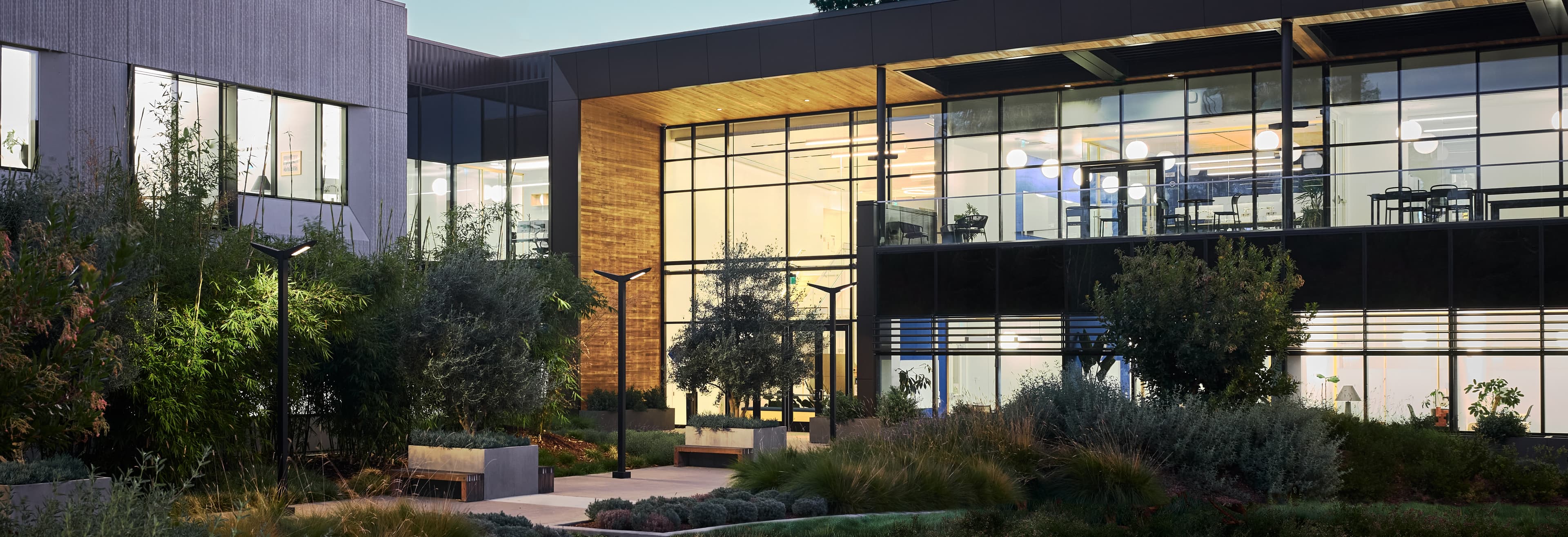
Arc Institute, 3181 Porter Dr., Palo Alto, CA 94304
November 19, 2025: 9:00am - 5:00pm

In this workshop, we will present practical strategies for handling data from Perturb-seq experiments, including preprocessing pipelines, performing differential expression analysis, and selecting optimal target genes for genome-scale screening. Participants will also learn how to construct scalable data loaders and train machine learning models to predict perturbation effects. The session will include hands-on guidance for working with perturbation data through packages and tutorials put together by the Arc team.

Session 1
Generating Perturb-seq data
9:00am - 9:45am
9:00am - 9:10am
Opening remarks
Yusuf Roohani (Arc Institute)
9:10am - 9:45am
Designing and running a Perturb-seq experiment: Common challenges and considerations for data generation
Tony Hua, Po-Yuan Tung (Arc Institute)
Session 2
Processing data from Perturb-seq experiments
10:00am - 12:00pm
10:00am - 10:30am
Cell-eval: A performant evaluation suite for single-cell perturbation models
Noam Teyssier (Arc Institute)
10:30am - 11:00am
Assessing perturbation effects and differential expression analysis
Basak Eraslan (Arc Institute)
11:00am - 11:30am
Working with big AnnData stores
Ilan Gold (scverse)
11:30am - 12:00pm
PerTurbo: A scalable Bayesian framework for whole-transcriptome differential expression analysis and optimal design of single-cell CRISPR screens
Logan Blaine (Harvard University)
12:00pm - 1:00pm
Lunch
Session 3
Building machine learning models using single-cell transcriptomics data
1:00pm - 3:00pm
1:00pm - 1:30pm
scBaseCount: AI-agent curated, uniformly processed single-cell data for over 500 million cells
Nick Youngblut, Chris Carpenter (Arc Institute)
1:30pm - 2:00pm
Studying perturbation effects one cell at a time with scvi-tools
Can Ergen (scverse)
2:00pm - 2:30pm
Heimdall: A modular framework for tokenization in single-cell foundation models
Ellie Haber, Shahul Alam (Carnegie Mellon University)
2:30pm - 3:00pm
State: Predicting perturbation effects across diverse cellular contexts
Abhinav Adduri (Arc Institute)
Session 4
Evaluating progress towards a virtual cell. Planning ahead for VCC2
3:15pm - 4:00pm
Panelists: Dave Burke, Alexander Dobin, Noam Teyssier, Hani Goodarzi (Arc Institute)
Moderator: Yusuf Roohani (Arc Institute)
4:00pm - 5:00pm
Networking Happy Hour Mixer (with posters)

About Arc Institute

Arc Institute is an independent nonprofit research organization located in Palo Alto, California, that aims to accelerate scientific progress and understand the root causes of complex diseases. Arc's model gives scientists complete freedom to pursue curiosity-driven research agendas and fosters deep interdisciplinary collaboration. The Institute operates in close partnership with Stanford University, the University of California, Berkeley, and the University of California, San Francisco.