
Introducing the 2026 Arc AIxBio Fellows
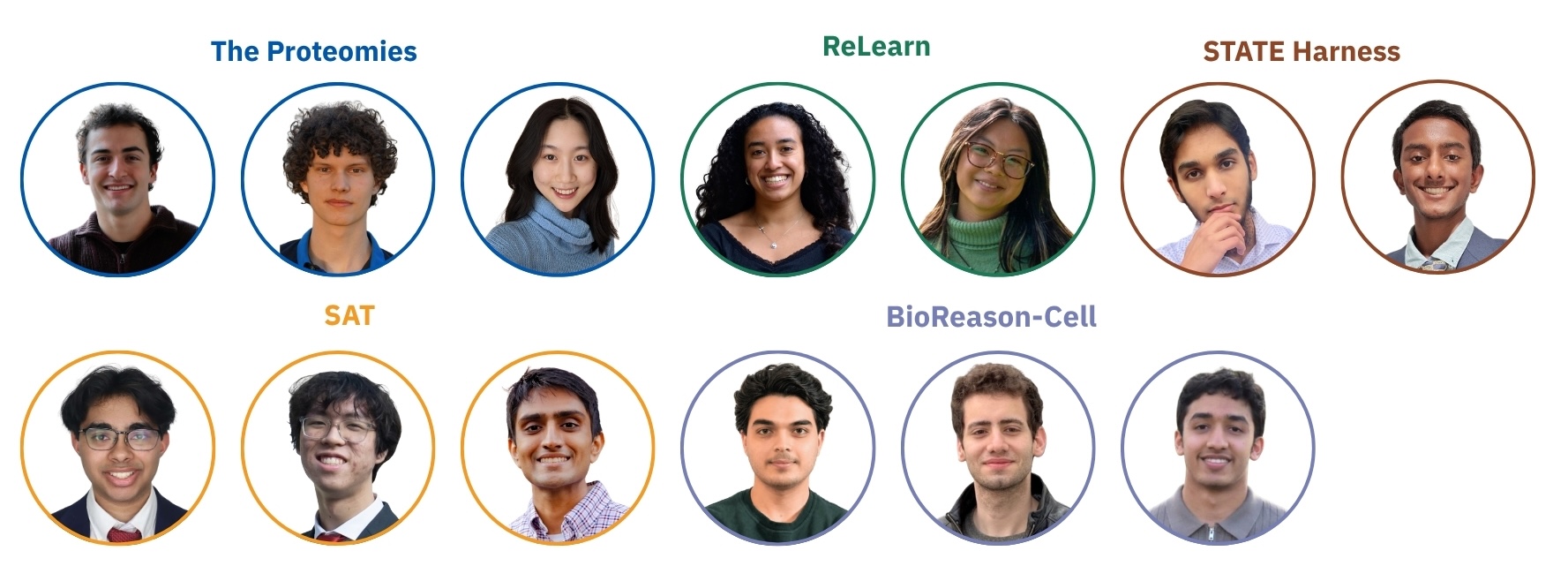
Some of the most exciting AI projects I have worked on started not with graduate students or postdocs in my lab, but with undergraduates driven by raw curiosity and technical ambition. So when we launched the AIxBio Fellows Program earlier this year, I was curious who would apply and what kinds of projects we'd see proposed.
The response exceeded my expectations; we received over 300 applications from individuals and teams combined, making the selection process extremely competitive. We even decided to accept more teams into the first cohort than we planned to just so we could work with as many undergrads as possible. I wish we could have taken more.
For those not selected, don't be discouraged. This field is still in its early days and there will be more opportunities to dig in on your own or in formal settings like this. At Arc, we're actively considering what kinds of programs or events can support the next generation of life scientists who want to build models to answer biological questions.
The 2026 Cohort
Now to introduce the first Arc AIxBio Fellows. These five teams—and thirteen students—will spend the next six to twelve months doing what I hope is the kind of exploratory, rigorous science that Arc is becoming known for. Each group will have a dedicated mentor, and access to Institute resources, while conducting the work off-site.
-
The Proteomies
- Members: Joshua Gertsvolf (McGill University), Finn Creeggan (McGill University), and Sabrina Du (McGill University)
- Mentor: Hamed Najafabadi, Associate Professor, Human Genetics, McGill University
-
SAT
- Members: Sameer Gabbita (Johns Hopkins University), Timothy Guan (Harvard University), and Adithya Madduri (Harvard University)
- Mentor: Jingtian Zhou, Science Fellow, Arc Institute
-
ReLearn
- Members: Alaysia Stone (MIT) and Jeannie She (MIT)
- Mentor: Ali Emadi, Postdoctoral Fellow, Goodarzi Lab, Arc Institute
-
BioReason-Cell
- Members: Adib Fallahpour (University of Toronto), Mohammadparsa Idehpour (University of Pennsylvania), and Arihant Jain (University of Pennsylvania)
- Mentor: Ivy Liu, Postdoctoral Fellow, Goodarzi Lab, Arc Institute
-
STATE Harness
- Members: Aymaan Shaikh (Cornell University) and Manish Kota (Vanderbilt University)
- Mentor: Abhinav Adduri, ML Tech Lead for Virtual Cell, Computational Technology Center, Arc Institute
About Each Team
The Proteomies
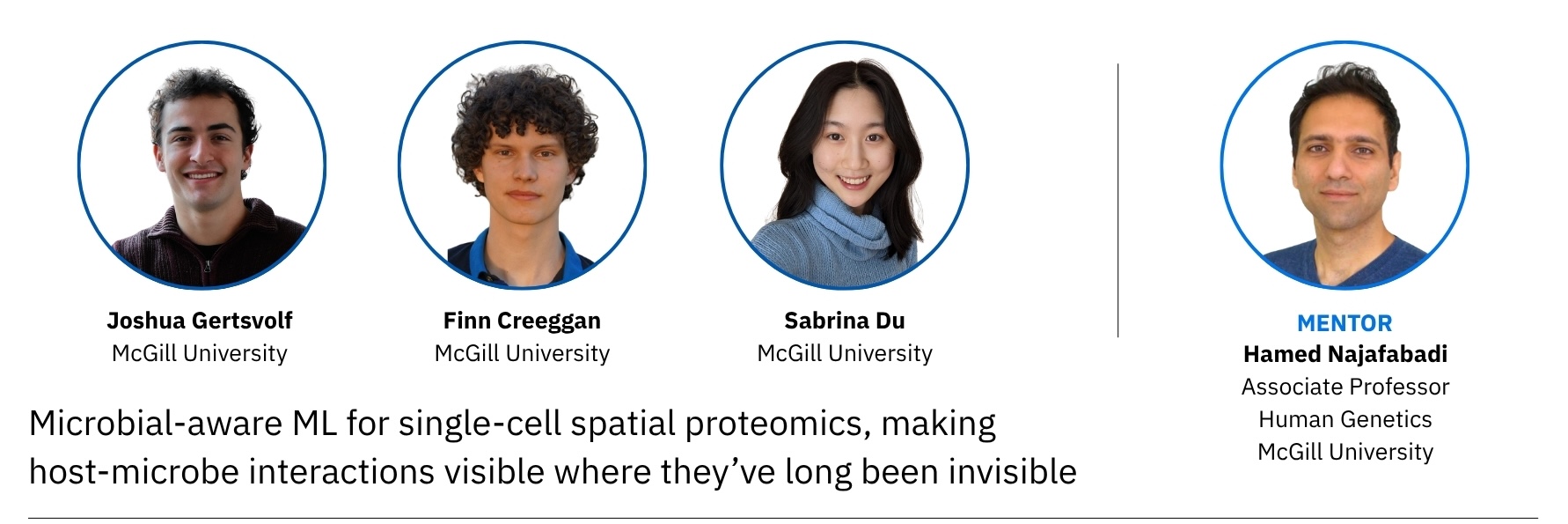
Decades ago, Joshua Lederberg coined the term microbiome and warned that these microbial communities had been all but ignored as drivers of health and disease. In single-cell spatial multiomics, that blind spot persists: virtually every state-of-the-art workflow assumes the tissue contains only host cells.
The Proteomies aim to build a machine learning approach to change that using spatial mass spectrometry and domain-aware models to detect and classify bacterial species at single-cell resolution within intact tissue, without needing predefined probes or bulk profiling assumptions.
SAT
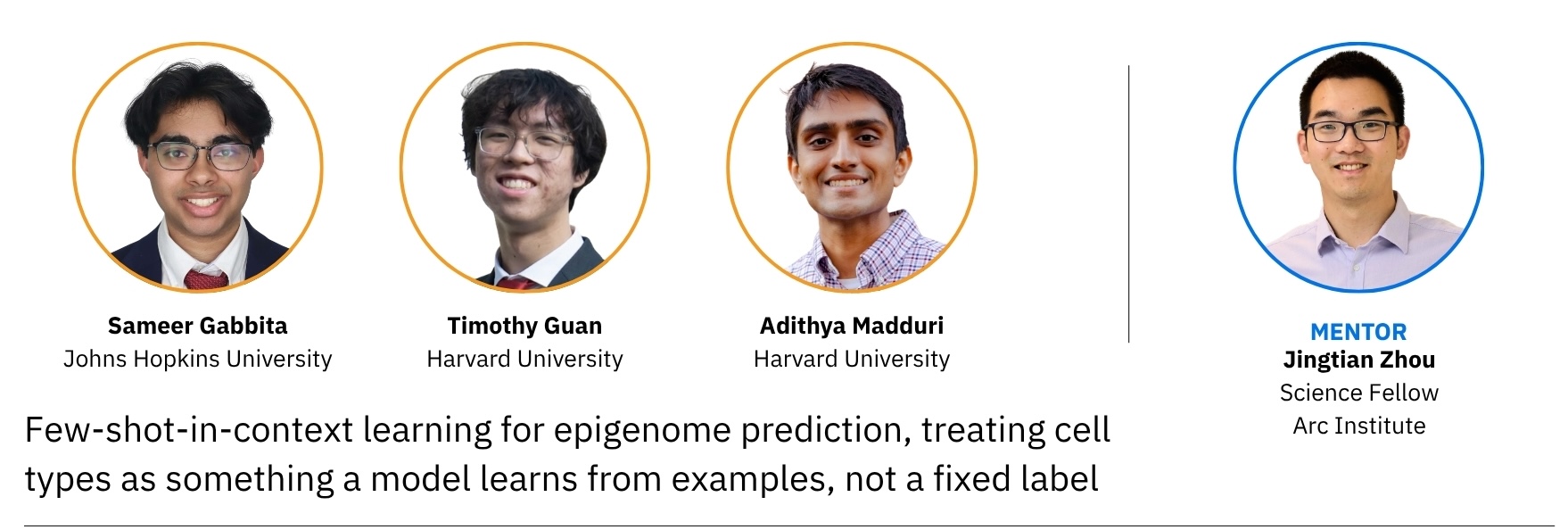
The best genomic foundation models today can predict regulatory signals from a DNA sequence, but they treat cell type as a fixed label. This means they need to be retrained or fine-tuned every time you want to apply them to a new cellular context.
SAT aims to fix that by building a context-aware model that treats cell identity as something learned from a handful of examples rather than something baked in at training time. The team plans to use a few-shot in-context learning approach for epigenomic prediction, built on top of Arc's Evo 2 as the underlying DNA encoder.
ReLearn
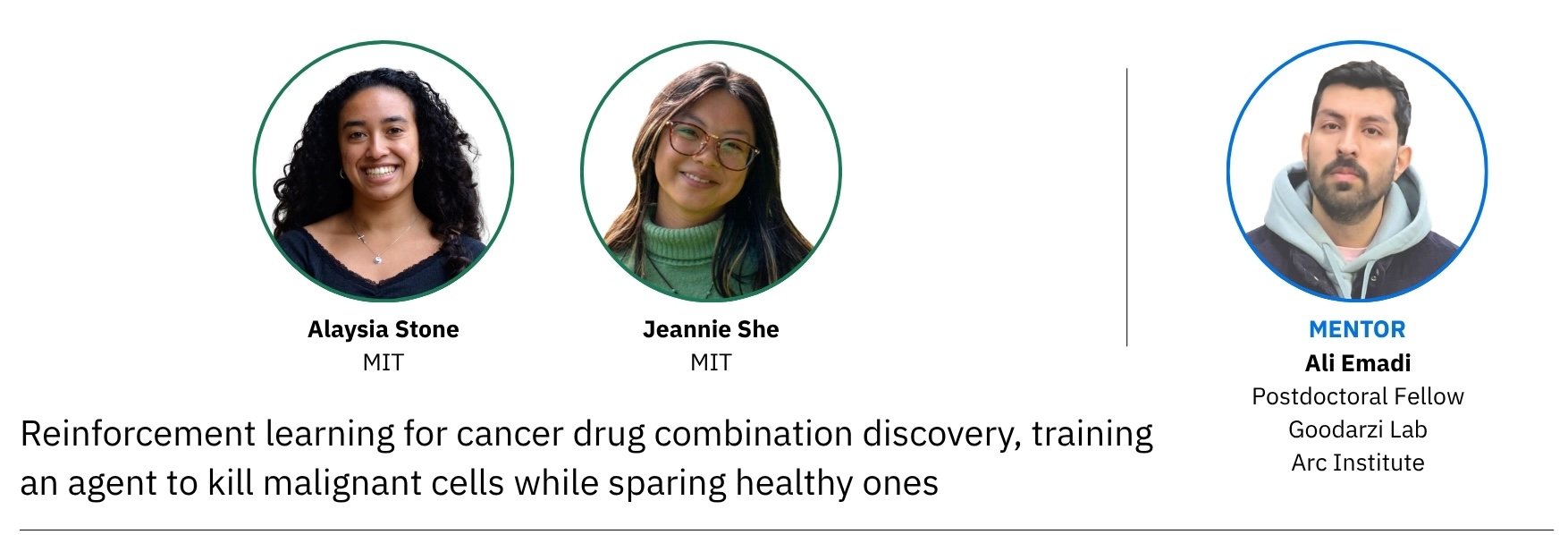
The ability to target multiple pathways at once, or sequence interventions strategically, holds real promise for cancer treatment. But predicting which combinations work, in which order, and across which cell types remains an open problem that current methods aren't well-equipped to solve systematically.
ReLearn aims to reframe it as a reinforcement learning problem: treating Arc's STATE virtual cell model as the environment, and training an agent whose reward function maximizes apoptotic probability in malignant cells while preserving the healthy ones alongside them.
BioReason-Cell
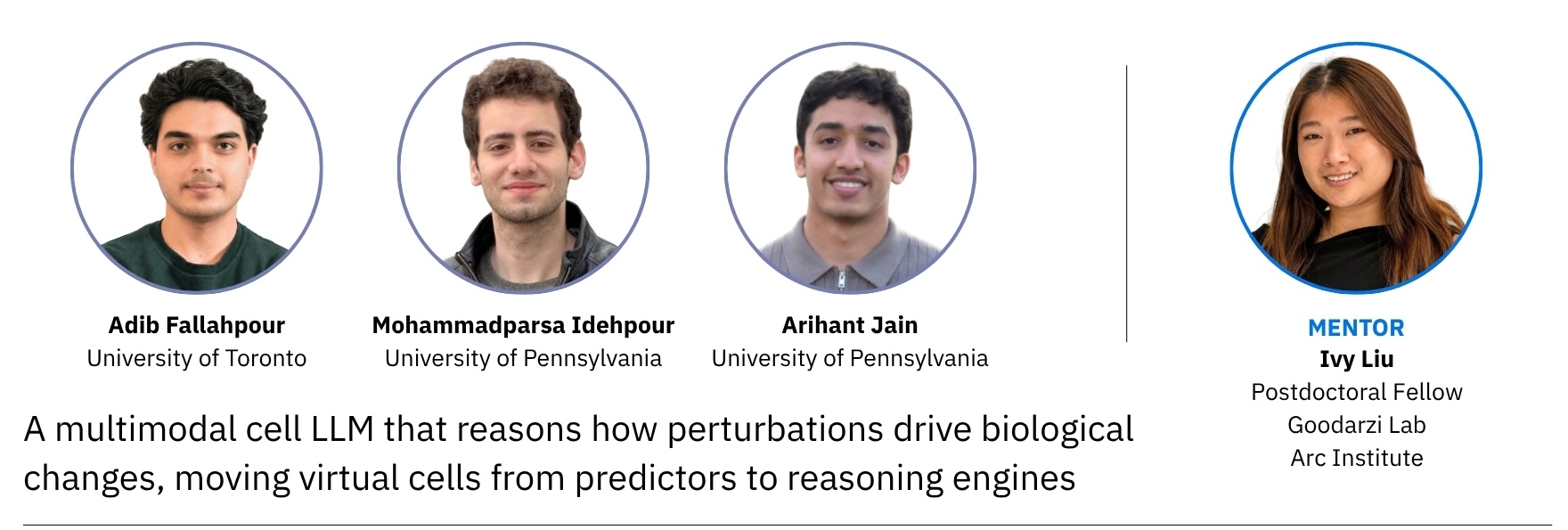
One of the most persistent frustrations in virtual cell modeling is that the best models are black boxes: they predict how a cell will respond to a perturbation, but they can't tell you why. This team's project builds directly on Arc's BioReason lineage, extending the approach that produced the first reasoning model in biology from DNA, to proteins, to the cellular level.
BioReason-Cell aims to combine leading LLMs with Arc's STATE model using reinforcement learning, producing a model that doesn't just predict cell state changes but generates reasoning chains about the mechanisms driving them, such as which pathways are involved, which targets are druggable, and which combinations might work.
STATE Harness
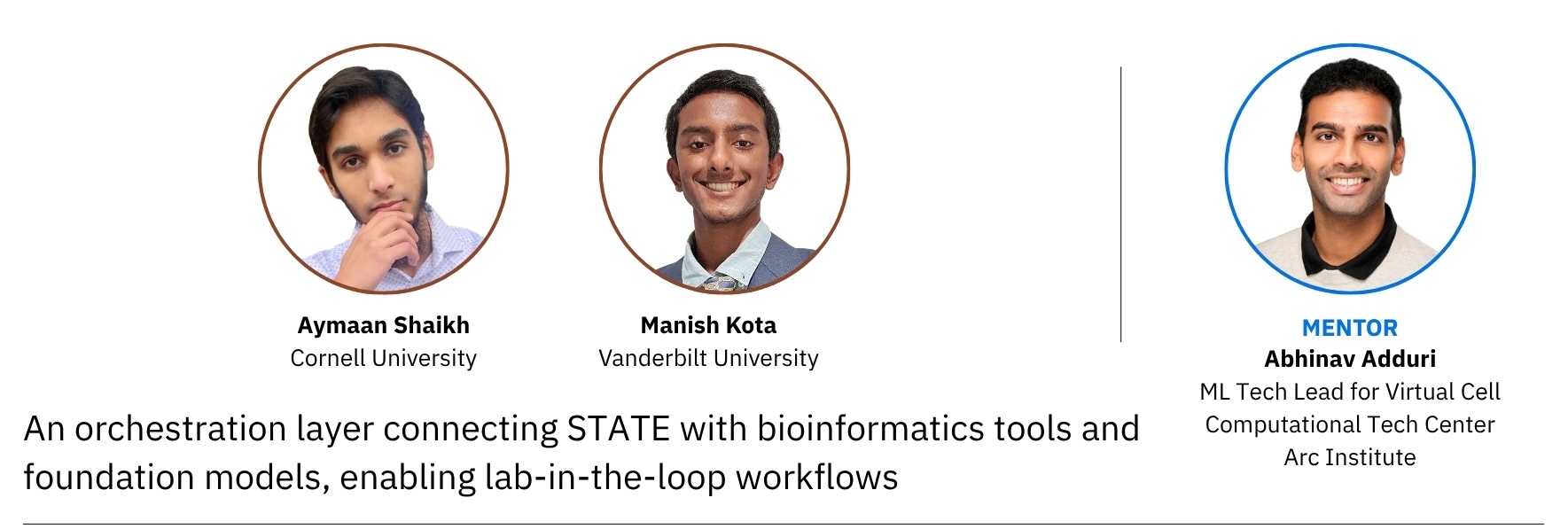
STATE Harness will be working directly within Arc's Computational Technology Center to extend the capabilities and utility of Arc's STATE model. This team will create an orchestration layer to integrate STATE with other bioinformatics tools and foundation models, enabling reasoning across biological modalities and scales. The resulting harness will be used to accelerate lab-in-the-loop workflows at Arc.
This is the first year of a program that we hope to run for a long time. We kept it deliberately small so we could do it well and learn from it. We'll be sharing updates on the fellows' progress as the year unfolds. If you want to hear when applications open for 2027, the best way is to follow us on social media (X, BlueSky, LinkedIn) or sign up for Arc's newsletter.
###
Arc is a full-stack institute for AI and biology research, dedicated to understanding the root causes of complex diseases. Arc's investigators are supported by long-term funding and freedom to pursue bold ideas. Its Technology Centers are research and development hubs focused on advancing Arc's Virtual Cell and Alzheimer's Disease Initiatives, leveraging genome engineering, multiomics, and cellular, mammalian and ML models. Founded in 2021, Arc is an independent nonprofit organization working in close partnership with Stanford University, the University of California, Berkeley, and the University of California, San Francisco.
Hani Goodarzi (X: @genophoria) is an Arc Institute Core Investigator and an Associate Professor of Biophysics & Biochemistry at UCSF.