
Announcing the Arc AIxBio Fellows Program for Undergrads
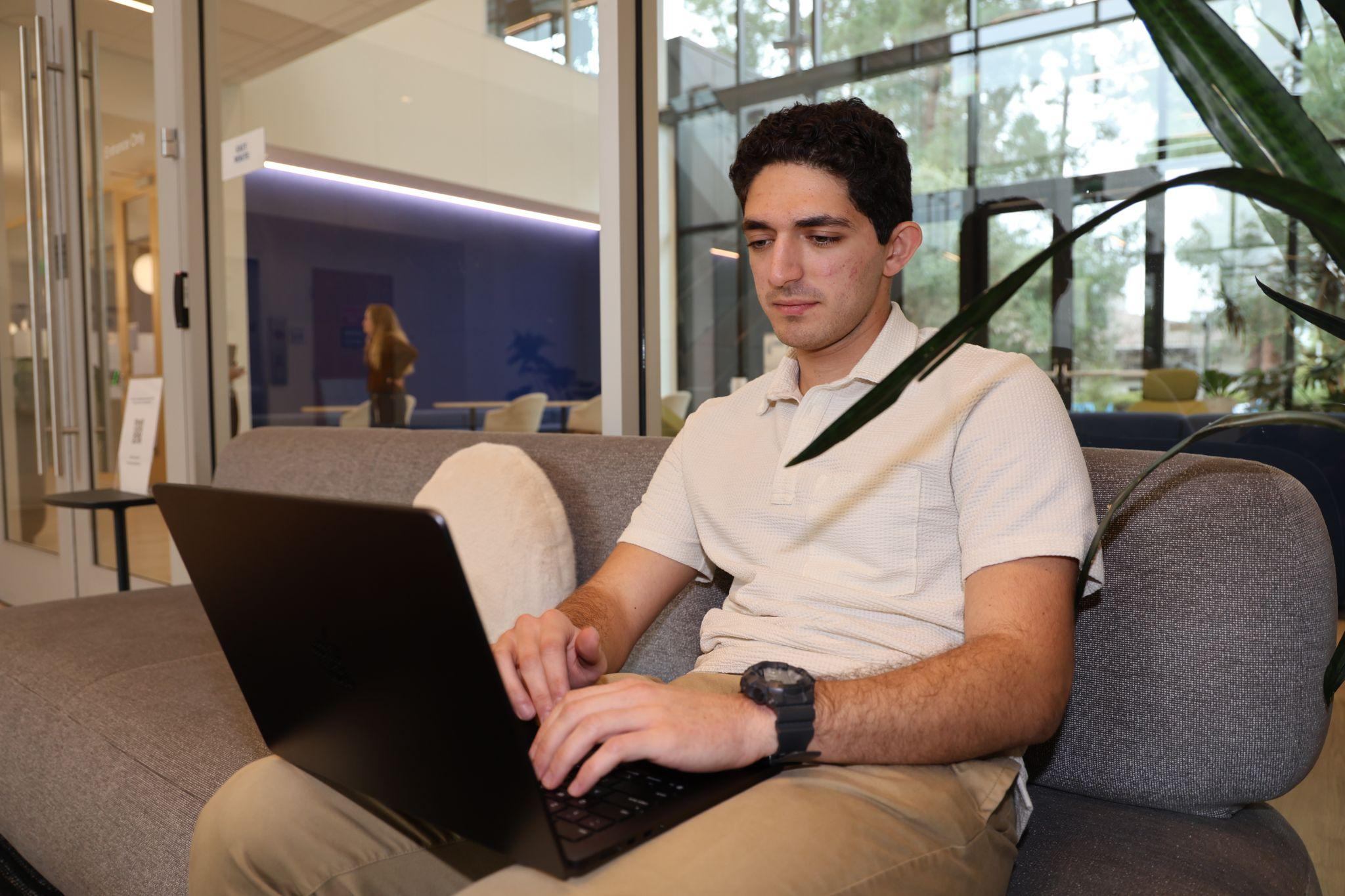
Advances in AI are only beginning to impact how biologists answer research questions, creating new training needs for the next generation of scientists. In our role operating at the interface of AI and biology, Arc Institute is committed to helping advance this promising field for years to come. As part of that strategy, we are launching the Arc AIxBio Fellows Program.
We designed the program to support and mentor undergraduate students working at the interface of artificial intelligence and life sciences. Drawing on our past collaborations with remarkable students, many of whom have helped shape foundational Arc efforts, this initiative offers technically strong, machine learning-curious undergrads a structured entry point into high-impact, exploratory research focused on biology and human health.
Fellowship Structure
This program is structured as a team-driven research experience, not a traditional internship. Rather than assigning pre-scoped tasks or individual roles, we invite small teams (2–3 students) to propose, own, and execute their own research projects at the intersection of AI and biology. Student teams can be pre-formed or we will assemble applicants together based on related proposals and complementary skillsets.
We are seeking students who are comfortable operating in open-ended research settings and who bring strong technical foundations, such as experience with deep learning (e.g., training or finetuning models), computational analysis of biological data (e.g., genomics, single-cell data), or applied software development for scientific workflows. Equally important is a genuine interest in problems in life sciences and the curiosity to ask and pursue new biological questions using AI tools.
Teams must be located in North America and are not expected to be present at Arc's Palo Alto location. They will work on their proposed projects virtually with Arc Institute researchers over the course of the program.
If selected, teams will receive:
- Mentorship from Arc investigators, postdocs, or staff scientists
- Stipend for the duration of the project (full-time for the summer and part-time during the academic year)
- Access to compute and GPU resources via Arc or affiliated partners
- A student cohort to foster collaboration, community, and shared learning
- Opportunities for authorship, presentation, and ongoing collaboration
We aim to support 2-4 teams this year, with projects running 6 to 12 months. Our goal isn't just scientific output; we aim to cultivate independent thinkers and give students room to explore, experiment, and grow.
How to Apply
Applications are now open. To accommodate different stages of project development, we are accepting applications through two distinct tracks:
Track 1: Project Teams (Pre-formed teams)
For teams of 2-3 students who have a specific research idea. Please submit a brief, 1-page proposal outlining:
- Your research idea and approach
- The training goals you hope to achieve
- Expected outputs (e.g., code, models, analyses)
Track 2: Teaming & Matching (Individuals)
For individual students with strong technical backgrounds (e.g., AI/ML, computational biology) who do not have a specific project in mind. Instead of a proposal, please submit a statement of expertise detailing your technical skills and interests. Selected applicants will be matched with other students to tackle projects proposed by Arc mentors.
We welcome applications from diverse academic backgrounds and institutions. You don't need to be in the Bay Area; you can be anywhere in North America. What matters is that you are motivated and ready to do great science.
Key Dates
- Friday, February 27th, 2026 at 5 pm PDT: Applications Due
- Wednesday, April 15th, 2026: Fellows Announced
- Monday, May 18th, 2026: Program Onboarding
What Comes Next?
This is the first year we are implementing this program, and we are keeping things simple to start. But our long-term vision is to build a lasting community of young researchers who contribute meaningfully to foundational biology and AI.
We will evolve the program as we learn. In time, we hope this becomes a launchpad for the next generation of life science researchers.
###
Arc Institute (X: @arcinstitute) is an independent nonprofit research organization based in Palo Alto, California, that aims to accelerate scientific progress and understand the root causes of complex diseases. Arc's investigators are supported by long-term funding and freedom to pursue bold ideas. Its Technology Centers leverage multi-omics, genome engineering, and cellular, mammalian and computational models to advance discoveries at the interface of biology and artificial intelligence. Founded in 2021, Arc partners with Stanford, UC Berkeley, and UCSF.
Hani Goodarzi (X: @genophoria) is an Arc Institute Core Investigator and an Associate Professor of Biophysics & Biochemistry at UCSF.