Arc's Alzheimer’s Disease Initiative

Arc's mission is to understand and treat complex human diseases. Unlike diseases caused by a single gene or a single pathogen, complex diseases arise from combinations of genetic and environmental risk factors, making them far more difficult to study and treat.

Alzheimer's disease is a textbook example of a complex disease. Millions of people worldwide live with Alzheimer's, and the toll on patients, families, and communities is immense. Despite over a hundred billion dollars in research investment from governments and pharmaceutical companies, no treatment has yet changed the fundamental course of the disease.

Current evidence points to hundreds of implicated genes, numerous environmental factors, and intricate interactions among multiple brain cell types. We are attacking this problem with a combinatorial approach at scale, integrating genetic data, clinical observations, and the latest biotechnologies to uncover the core disease mechanisms shared across different combinations of risk factors. Our goal over the coming years is to build an experimental and computational framework capable of identifying meaningful therapies for Alzheimer's and, ultimately, for other complex human diseases.
Key Elements

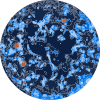
imagine of an immuno-organoid with labeled ramified microglia

Scalable human tissue models

We have built scalable 3D experimental models of the brain designed for reproducible high-throughput screening. These include spheroids – defined assemblies of key brain cell types including neurons, microglia, and astrocytes – that display mature network activity, as well as immuno-organoids with microglia that are fully integrated into the tissue and display ramified, in vivo-like morphology.

illustration of genetic, chemical and biologics perturbations in an organoid

Diverse perturbations

We systematically expose these models to genetic, immune, and metabolic perturbations at scale, selecting inputs guided by clues already present in patient data. By reading out large volumes of molecular and functional data, we can determine which combinations of risk factors give rise to disease characteristics and identify convergent changes in cell state and function.

illustration of causal inference gene network graph

Causal inference

We are building a comprehensive map of how genetic and environmental factors reroute cellular signaling in early stages of Alzheimer’s disease. Using recent computational advances in causal inference, we aim to identify the key common nodes across these inputs, which constitute the most promising candidates for drug therapies. Through the close integration of machine learning and experimental teams at Arc, we are systematically testing whether nominated therapeutic targets can reverse disease phenotypes, with the ultimate goal of advancing one or more targets and drugs toward clinical trials.

Why Arc?

A meaningful and mechanistic therapy for Alzheimer's would be a significant advance. But we also intend for this initiative to serve as a general blueprint for complex diseases: combining large-scale functional genomics, human cell models that capture interactions across key cell types, physiological perturbations that recapitulate real-world risk factors, and causal AI to advance treatments for complex diseases systematically.

Open Roles

Arc is looking for talented individuals to contribute to this ambitious initiative. Learn more on our jobs page or sign up to receive bimonthly job alerts.