Meet Arc Science Fellow Maya Arce, who is unlocking the genetic underpinnings of autoimmune diseases
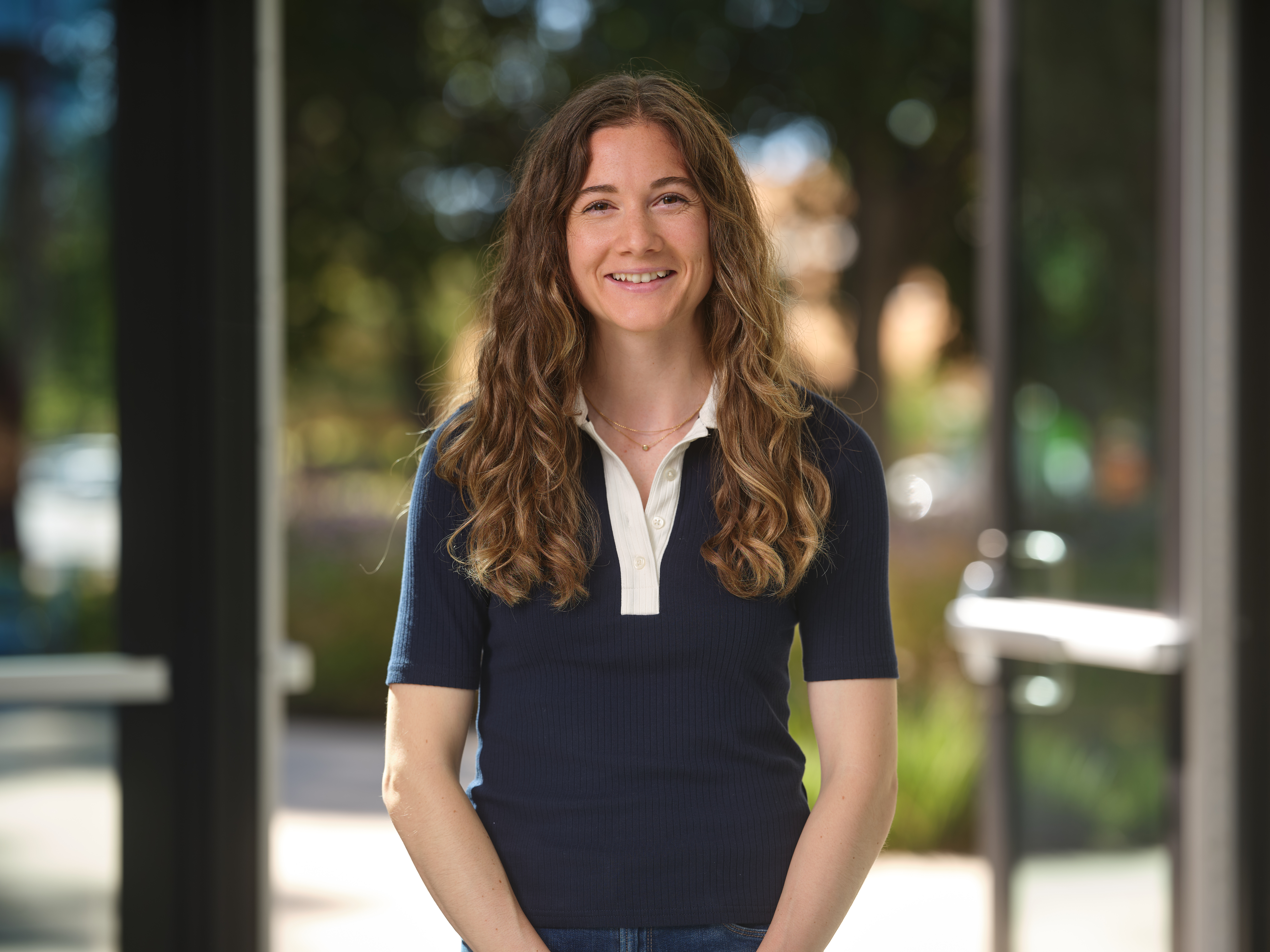
Arc Institute welcomes Maya Arce (X: @maya_m_arce) as our third Science Fellow. Arce (pronounced “ar-say”) recently completed her PhD in biomedical sciences at UCSF, where she studied how gene regulatory networks control T cell behavior and identity in the Alex Marson Lab.
Arc’s Science Fellows program is designed to support outstanding early career researchers who want to transition to a principal investigator position directly after their doctoral training. At Arc, Arce's group will use large datasets and genomic techniques to identify new therapeutic targets and better understand how genetic mutations affect immune cell function. Her laboratory aims to move beyond studying individual genetic variants to understanding how combinations of variants influence disease risk.
Below, Arce discusses her personal interest in tackling autoimmune diseases, her genomics-focused approach to immunology, and how Arc's emphasis on AI and complex diseases offered a supportive environment for her research goals.
What made you consider Arc for your next career move?
It was a combination of the people who were here, positive word-of-mouth, and Arc’s emphasis on tech development, genomics, and complex disease. As I started considering these early independence positions with a push from my mentor Alex, I thought my research vision fit very well with what was available at Arc and the Institute's investment in computation.
While I'm not an AI scientist myself, I have been and continue to be interested in generating large genomic datasets that hold potential to answer a wide spectrum of questions. It feels like we sometimes waste a lot of information when generating genome-wide data. We’re trying to answer specific questions, but there's so much more we could extract. It’s clear from the faculty here and Institute-wide efforts like the Virtual Cell Initiative that Arc is invested in utilizing existing datasets at a maximal capacity with AI. I hope that we can contribute to that effort and provide unique resources to improve the questions that we can ask and answer computationally.
How did your personal experience shape your research focus?
I became interested in immunology because I come from a family with a complex history of autoimmune diseases, which is common for diseases of this nature with a strong genetic component. Genome-wide association studies over the past few decades have identified many variants associated with autoimmune diseases. However, there are still knowledge gaps about the regulatory pathways affected by the variants that have limited our success in translating this information into personalized therapeutics.
What gaps do you see in current autoimmune disease research?
There are a lot of people thinking about this area, because each autoimmune condition is complex. I’m drawn to approach this problem from the angle of trying to understand disease onset by taking into consideration the many genetic factors that influence disease susceptibility. We intend to move away from looking at the effects of individual variants linked to disease and instead consider the combinations of variants that affect disease risk. Ultimately, it’s the combination of many factors that is a likely determinant of whether someone will develop an autoimmune disorder in their lifetime. So, we need to better understand mechanistically what changes are happening that are leading to disease.
We are also working to establish a more complete understanding of the mechanics behind the protein regulators that control various immune properties. We hope that this work will improve our ability to control cellular behavior in the context of a wide variety of diseases including both autoimmunity and cancer.
How does your research combine genomics with immunology?
Genomic screening has expanded the number of proteins or different genes that we can associate with a specific trait. Genomics also enables us to study more complex traits such as cell states without relying on limited markers. Both of these techniques are incredibly useful in the immune context because immune cells are really dynamic and can shift between states and take on new identities. We use CRISPR gene editing screens to discover new associations between genes and specific cell traits and a variety of genomic assays to tease apart the mechanisms enabling these genes to control cell behavior.
For example, in grad school, I worked on MED12, which is part of a very broadly expressed protein complex that helps to coordinate transcription. These genes are not frequently mutated in people naturally, which has limited our understanding of niche roles they have in specific cell types, like T cells. However, we see parts of this complex come up all the time in genome-wide screening in immune cells, specifically the subunit MED12. Gene editing has enabled us to understand its important contributions to immune cell function and that's really expanding the field. Since then, we have been motivated to dissect other regulators of fundamental cellular functions to better understand their control over immune cell specific attributes.
(Arce’s paper on MED12 was published December 2024 in Nature: “Central control of dynamic gene circuits governs T cell rest and activation”)
What's your vision for the lab at Arc?
I'm really excited to bring in people that are interested in genomics, biochemistry, and molecular biology. I think that basic interest in these fundamental processes can be applied to so many different cell types, especially immune cells and help us to understand complex disease.
I’m also looking for new collaborators. The most interesting discoveries that I have contributed to have involved groups of different people with completely different expertise. We want to integrate single-cell level genomics, perturbations, and biochemical profiling with models that help capture the intricacies of the extracellular environment. We need amazing people to help us explore findings through in vitro and in vivo systems.
I'm hoping my lab will have a very biology-focused approach to learn new things, but leveraging these large datasets and computational approaches that are available at Arc. The goal is to move beyond just identifying associations to really understanding the mechanistic basis of how genetic variation contributes to autoimmune disease risk and progression.