With "Delivery Cells," Felix Horns is Building a New Class of Programmable mRNA Therapeutics
A Q&A on engineering living cells to do what lipid nanoparticles and viral vectors can't.
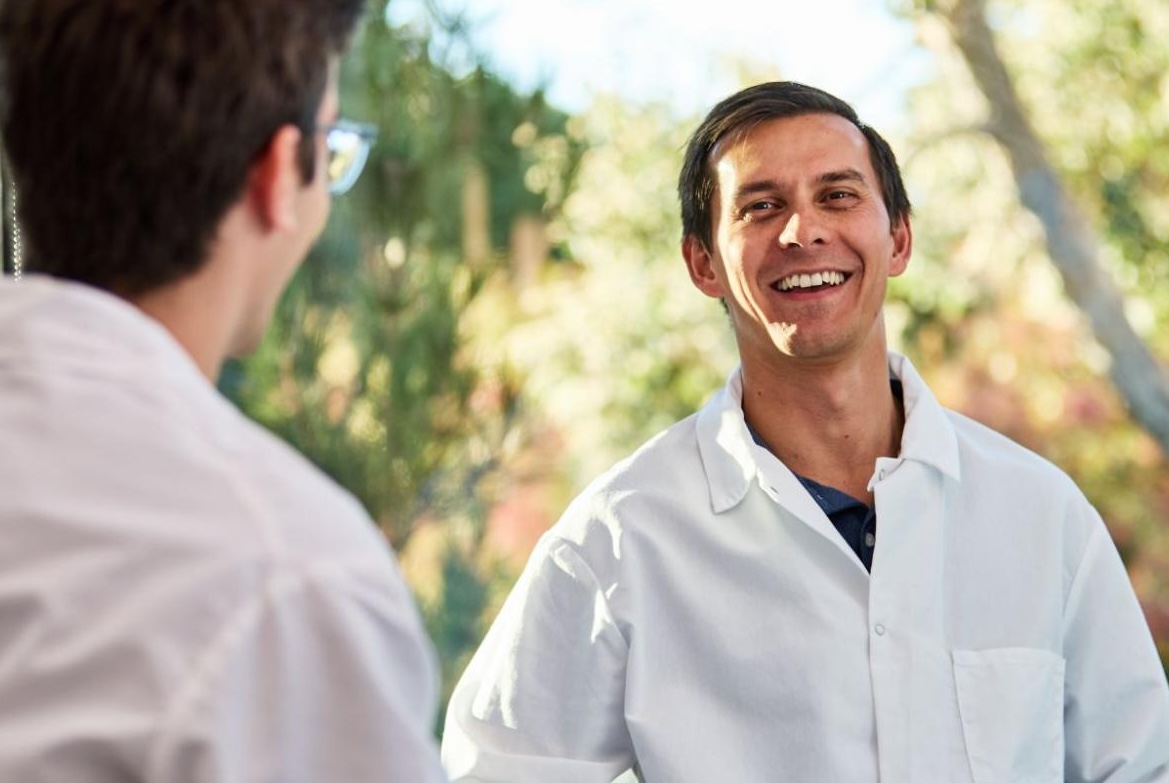
The idea started during the pandemic. While learning about how viruses transferred cargo from cell to cell, Felix Horns, then a postdoc, began to wonder whether the same principle could be harnessed therapeutically. By 2023, he published a proof-of-concept study in Cell showing that cells could be engineered to package and deliver mRNA to other cells.
Since joining Arc as a Core Investigator, Felix (X: @FelixHorns) has been working across three interconnected problems: the basic biology of cellular secretion, the engineering of delivery and monitoring systems, and their translation into therapeutically relevant cell types. With a new Perspective piece in Nature Reviews Bioengineering, Felix shares where the science stands, what his lab is building, and what this could mean for patients.
What specifically can "delivery cells" do that lipid nanoparticles and viral vectors can't?
The key advantage is that we can leverage the intelligence of cells. Cells can sense their environment, integrate information about different signals, and decide what they produce in response. What I see as the major advantage of this approach is harnessing those capabilities: cells that can penetrate into tissues, sense their local environment, and only activate delivery when and where it's needed. Essentially, a smarter delivery vehicle than anything currently available.
Why have you focused on mRNA as the cargo?
One of the nice things about mRNA is how versatile it is. If you can deliver an mRNA, you can express any protein, which opens up an enormous range of possible effects. This spans genome editing, reprogramming cell identities, killing specific cells, or modulating cell states in more subtle ways. That said, the approach should be generalizable to other kinds of cargo, including DNA or proteins, which might have advantages for specific conditions. But mRNA covers a lot of ground.
How did your 2023 Cell study set that stage for what's possible with "delivery cells"?
The paper demonstrated two different capabilities using the same underlying system. The first is that we showed that cells could be engineered to package and deliver RNA cargo to other cells, using components originally derived from viruses and later designed protein components. We demonstrated this in a co-culture setup, with two populations of cells sitting next to each other in a dish.
The second is almost the inverse. We used this same secretion approach as a way to monitor cell behaviors non-destructively. Normally, to sequence the RNA inside a cell you have to destroy it, which means you can only ever take a snapshot. With this approach, cells can spit out RNA that encodes information about what they're doing, which you can collect and sequence without ever disrupting them. We called the overall system COURIER.
What happened after the paper was published?
There was a lot of excitement. The synthetic biology community has been particularly enthusiastic about using COURIER to build multicellular circuits. There's also been strong interest from the mammalian biology and physiology community in using it to manipulate cells inside living animals, within tissues.
For me personally, the direction I was most excited about going next was the therapeutic one. I wanted to know whether we could use this to make RNA delivery cells that go into the body, detect disease sites, and conditionally activate production and secretion of therapeutic RNA cargo right where it's needed.
What are the biggest challenges you're running into?
One major challenge is figuring out which cell types to use as delivery cells. Different cells have different capabilities. T cells can penetrate many tissues, but they're excluded from some tumor microenvironments. Hematopoietic stem cells home to bone marrow. Monocytes are actively recruited to many tumors. The question is what cell type gives you the right access to achieve a given therapeutic effect?
A related challenge, and one that surprised us, is that the components that work well for packaging and secretion in one cell type don't necessarily work well in another. There's no one system that rules them all. That was frustrating at first, but I've come to see it as something more interesting. It means that there's fundamental biology about the relationship between cell types and the molecular machinery they use for secretion. Understanding those rules will help us both learn something new about biology and guide the engineering more predictably.
What is your lab focused on right now?
Those two challenges are actually where we're spending a lot of our energy. T cells are a key test case because they have extraordinary reach in the body, and we're working to develop secretion systems that function well specifically for them, with the longer-term aim of deploying them as delivery vehicles.
Fast forward 5-10 years. What does this actually look like for a patient?
What I find most exciting is the possibility of taking cell therapies that exist today, like CAR-T cell therapies, and endowing them with new capabilities to address diseases where we currently have large unmet needs.
Consider a degenerative disease like Parkinson's, where patients lose dopaminergic neurons in the brain. You could imagine a patient receiving an infusion of delivery cells that travel to the brain and deliver RNA that reprograms other cell types into dopaminergic neurons, replenishing what's been lost. That's the dream. This kind of approach could open up entirely new therapeutic modalities that simply aren't possible today.
Your lab also works on something you call temporal genomics. Can you explain that?
This connects back to the monitoring side of COURIER. One of the things that's been missing from genomics is the ability to understand how cells change across time inside a living animal. We have extraordinary tools now for profiling cells, such as single-cell sequencing or spatial approaches, but they're all snapshots. Biological processes such as development, aging, and disease progression all unfold over time.
We want to develop approaches that let cells continuously report what they're doing by secreting small amounts of RNA that we can collect and sequence without disrupting or killing them. It's non-destructive longitudinal genomics, and it could transform our ability to study dynamic processes in living systems.
How does having a lab at Arc shape the kind of science you're able to do?
First, having funding that isn't tied to specific projects gives me the freedom to take on bigger, riskier ideas and to start testing them right away, without waiting for a grant cycle. Second, Arc has very low barriers to collaboration. I've had genuinely fun and surprising collaborations with people throughout the building, across the core labs and tech centers. Being in that kind of environment lets you explore ideas that emerge from the intersection of everyone's expertise.
Any final thoughts?
Come join us! We're looking for people who are excited to work across technology development, mammalian biology, and disease, and who want to build new approaches to tackle important problems. If that sounds like you, please reach out.
###
Horns, F., Tobin, V., & Elowitz, M. B. (2026). The Delivery Cell: Harnessing cell-to-cell mRNA transfer for therapeutics. Nature Reviews Bioengineering. DOI: https://doi.org/10.1038/s44222-026-00438-2